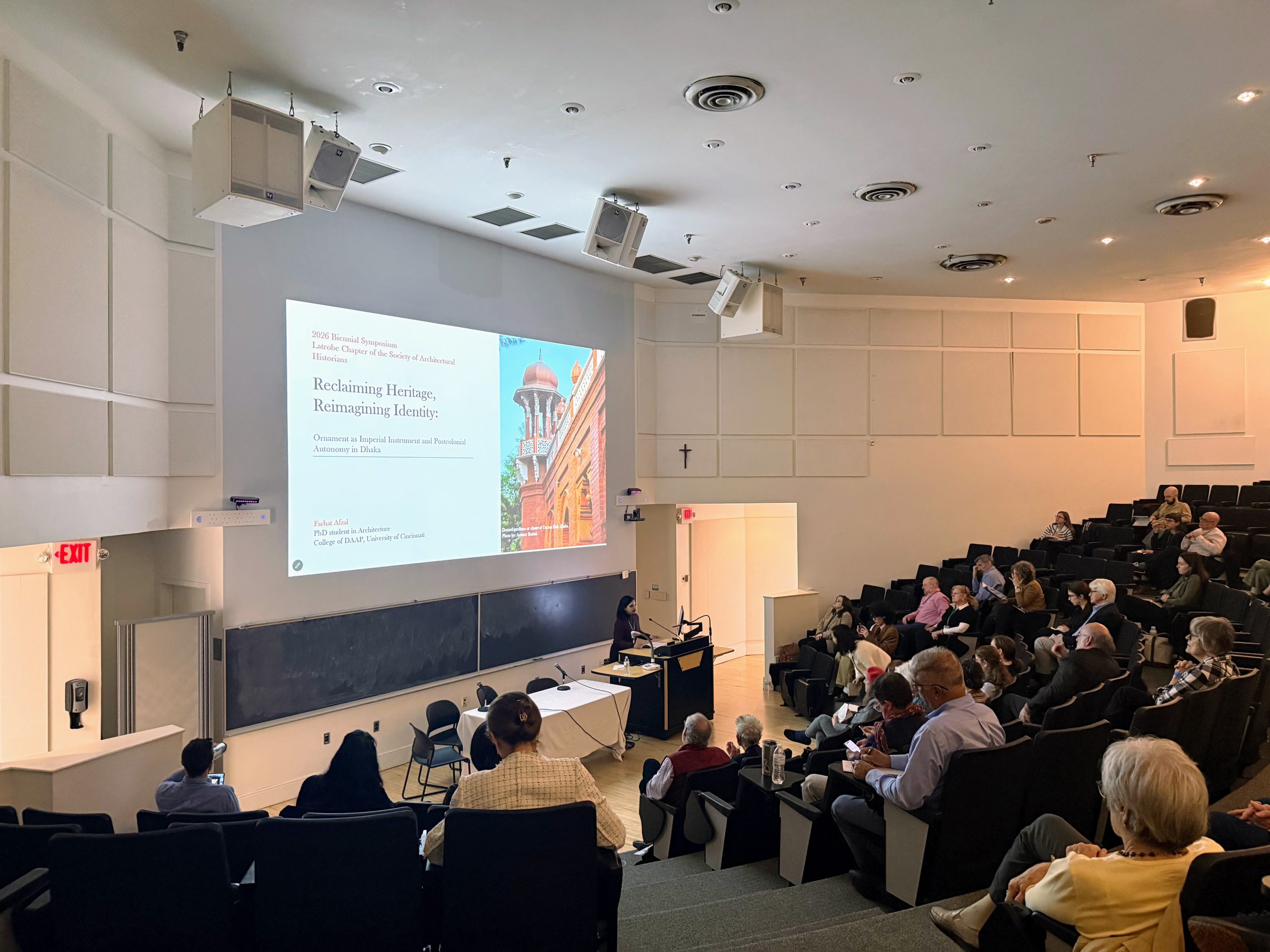
Presentation at the Symposium of the Latrobe Chapter of SAH

I had the pleasure of presenting at the 15th Biennial Symposium of the Latrobe Chapter of SAH, held at The Catholic University of America and the National Building Museum. The conference theme was Architecture and National Identity, and featured a keynote by Lawrence Vale, Professor Emeritus at MIT, whose seminal book on this topic helped shape the field in the 1990s.
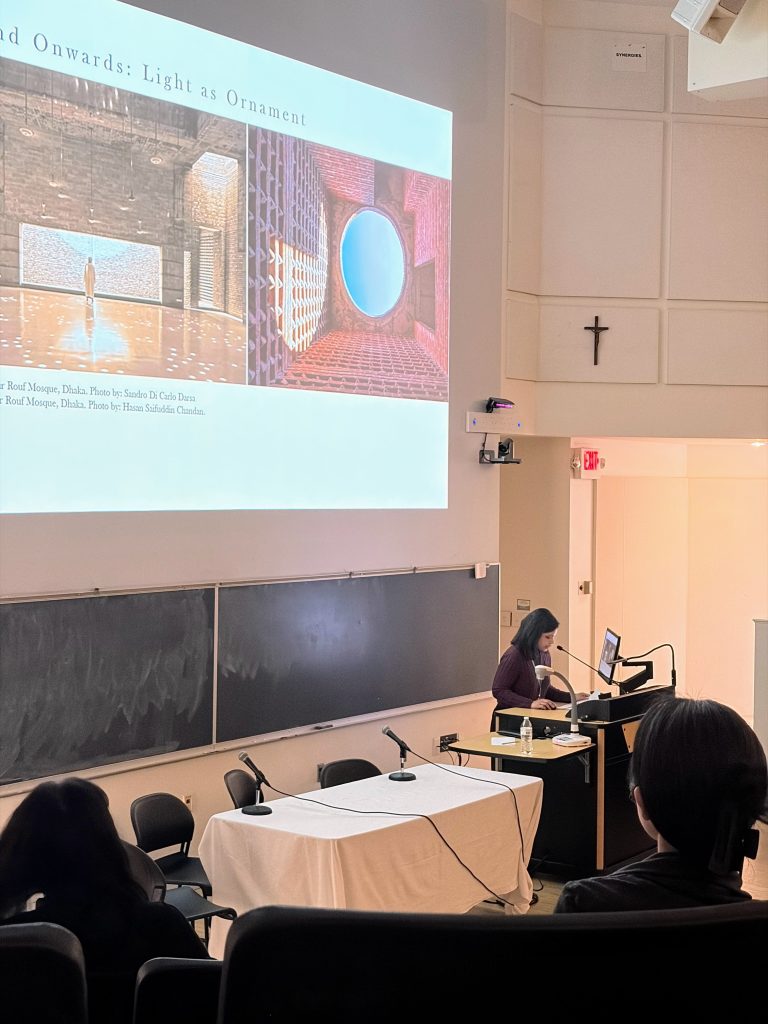
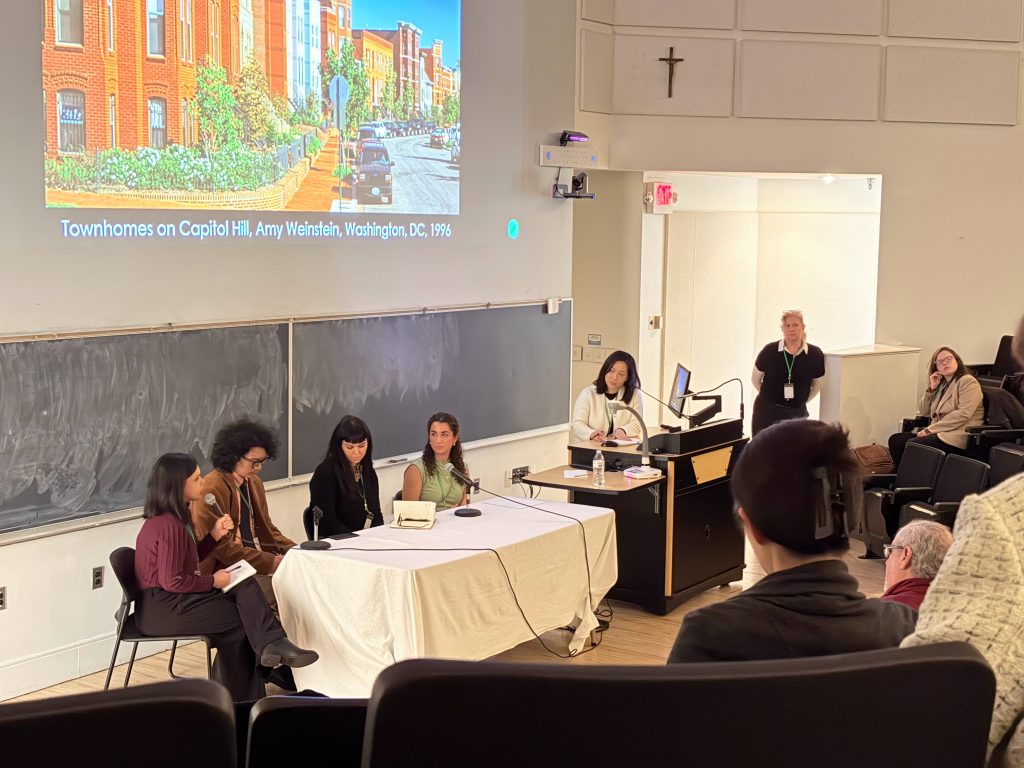
I presented my early research examining how ornamentation has been used to assert Bangladeshi identity from the 1880s to the 2010s, looking at both colonial and modern architecture in Dhaka. The highlights of the event were the opportunity to speak with Professor Vale, have Diane Rhyu Taylor moderate my panel—someone I have known professionally for many years—and present alongside my good friend Chanhyo Jung.
Architectural history has long framed modernism and ornament as opposites — a divide shaped in large part by Adolf Loos’s moral critique of decoration and by Eurocentric narratives that equate progress with formal purification. But Dhaka unsettles that binary.
Across colonial rule, Cold War development, and eventual independence, ornament did not vanish under the pressures of modernism. It changed. It shifted from imperial mediation, to postcolonial uncertainty, to modernist abstraction, and ultimately to localized reinterpretation.
What this history reveals is that ornament is not simply decorative excess left behind by modern architecture. Rather, it is something modernity reshapes and redirects. In postcolonial contexts especially, ornament becomes a lens through which we can see how global modernism is absorbed, negotiated, and made culturally specific.
In Dhaka, what once appeared as applied surface decoration reemerges in structure, in proportion, in light, and in spatial experience. And in that transformation, architecture does more than symbolize sovereignty — it becomes the very ground on which sovereignty is tested, contested, and articulated.